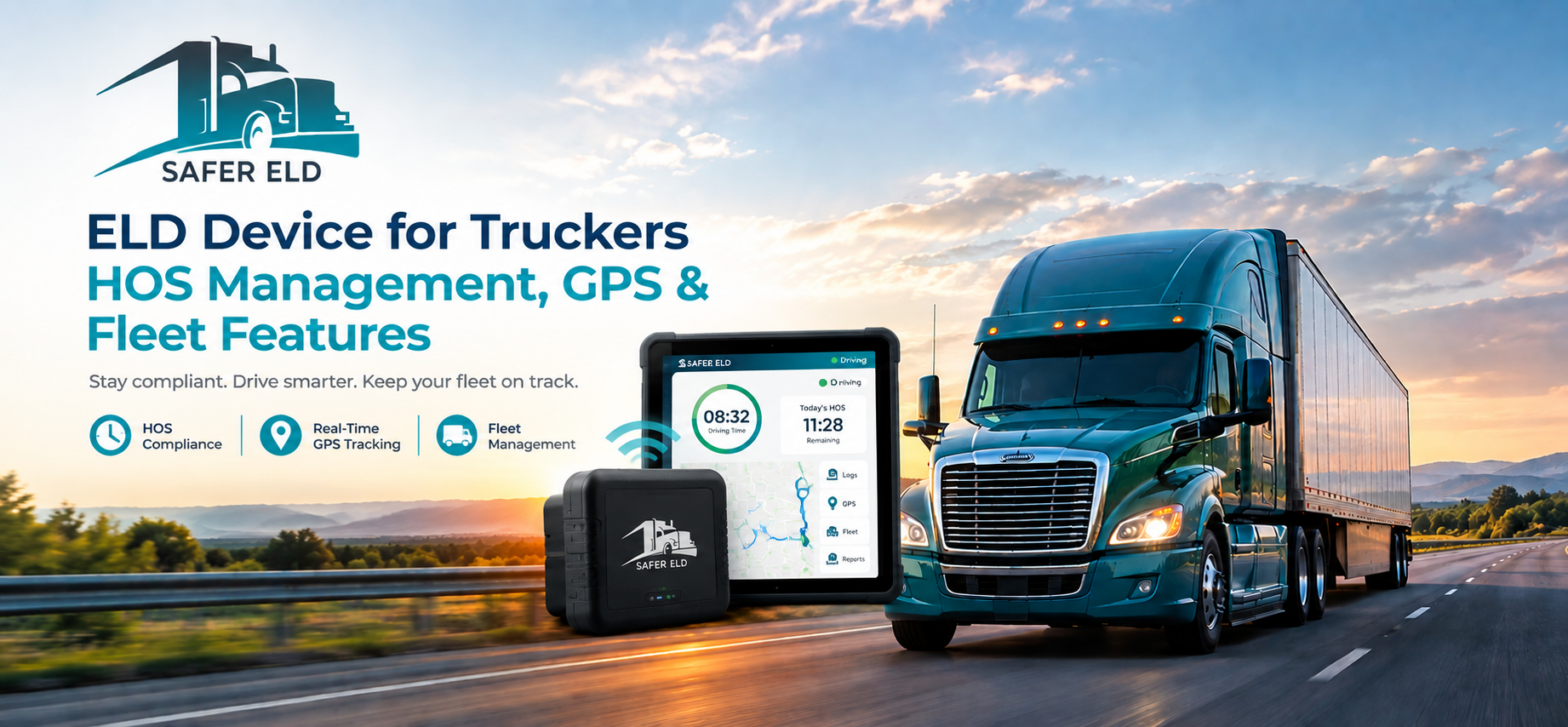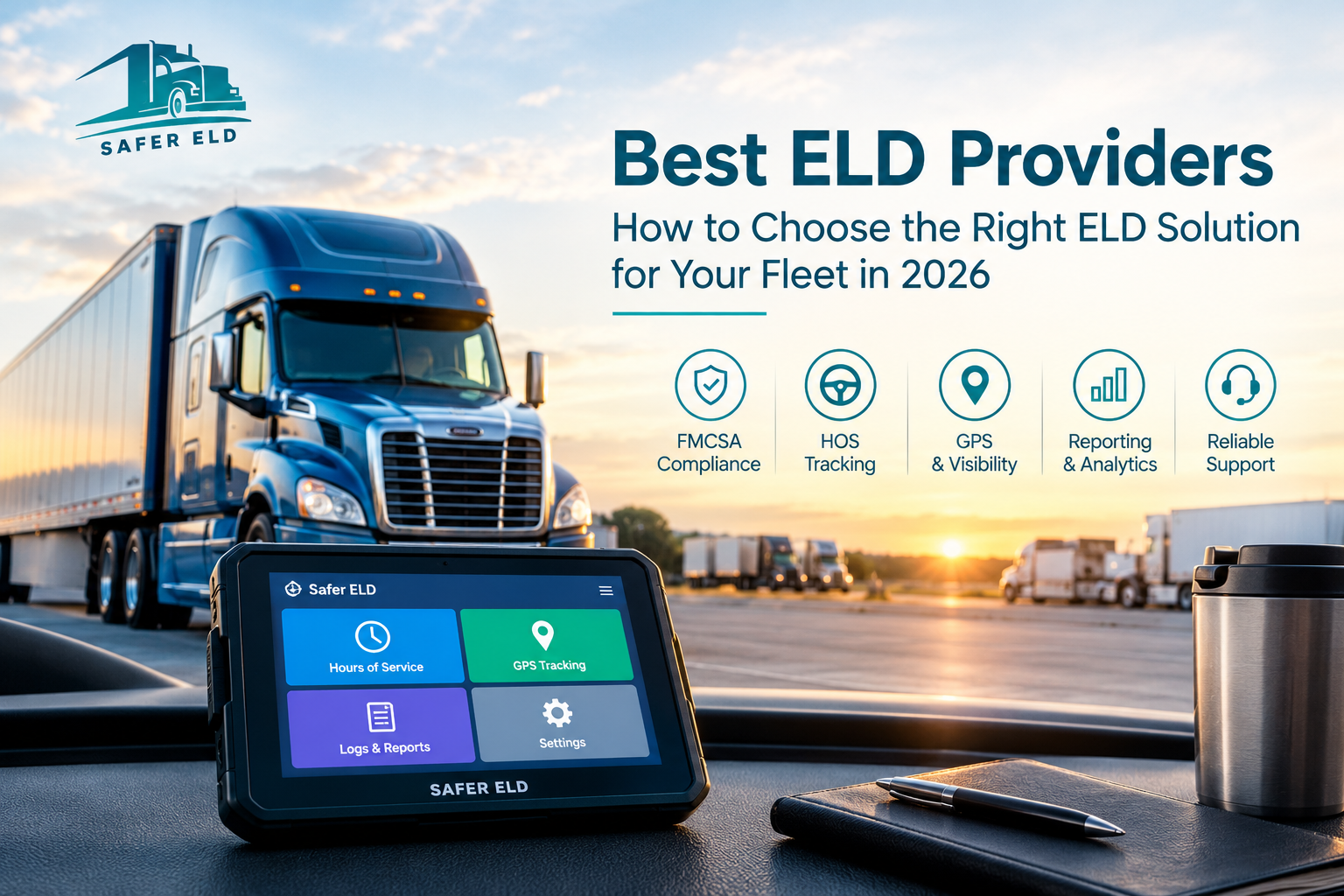
Choosing the best ELD providers is an important decision for owner-operators, truck drivers, and fleet managers in the United States. An Electronic Logging Device (ELD) helps record driving activity and required duty-status information under applicable federal regulations. The right solution can also support recordkeeping, reporting, and everyday fleet operations.
When comparing ELD providers, consider features such as FMCSA registration, Hours of Service (HOS) recordkeeping, GPS tracking, ease of use, technical support, and pricing. Safer ELD offers ELD and fleet-management tools designed to support trucking businesses with electronic logs and operational information.
Why Is Choosing the Best ELD Provider Important?
An ELD is more than an electronic logging device. It can help trucking businesses organize driving records, review available HOS information, and access useful fleet data.
Choosing a suitable provider can help businesses:
- Support recordkeeping: Manage electronic logs and duty-status information.
- Improve fleet visibility: Use available GPS and tracking features to review vehicle activity.
- Organize reports: Access operational information for business reviews.
- Simplify daily workflows: Use software designed for drivers and fleet managers.
- Manage costs: Compare subscription fees, hardware costs, and available features.
The goal is to select a solution that fits your operating requirements without paying for features your business does not need.
1. Verify FMCSA Registration Before Buying
Before selecting an ELD, check whether the specific device appears on the current Federal Motor Carrier Safety Administration (FMCSA) Registered ELD List.
FMCSA maintains a list of registered, self-certified ELDs. Registration status can change, so businesses should verify the exact model before purchasing or using it.
Keep these points in mind:
- Check the device model on the official FMCSA list.
- Confirm that the device meets your operational requirements.
- Review current registration status periodically.
- Do not assume every product offered by an ELD provider has the same registration status.
Visit the https://www.fmcsa.dot.gov/safety/passenger-safety/search-results/by-company
to verify a device.
2. Compare Hours of Service Tracking Features
Hours of Service tracking is a key consideration when choosing among the best ELD providers. Drivers who are required to maintain Records of Duty Status (RODS) generally need an appropriate ELD unless an exception applies.
Look for features that help drivers and fleet managers:
- Record driving activity and duty status.
- Review available HOS information.
- Manage electronic logs.
- Access and transfer records when required.
- Identify and address recordkeeping issues.
An ELD supports electronic recordkeeping but does not automatically ensure compliance. Drivers and carriers remain responsible for following the HOS rules that apply to their operations.
3. Evaluate GPS Tracking and Fleet Visibility
GPS tracking can help fleet managers review vehicle locations and understand fleet activity. However, the level of tracking available differs between providers and plans.
Before choosing a solution, consider:
- Whether vehicle location information is available.
- Whether the plan includes real-time tracking.
- How fleet managers access tracking information.
- Whether trip information and operational reports are available.
- Whether the features suit your fleet size and workflow.
Expanded real-time GPS tracking is an additional feature, not a general requirement of the federal ELD rule.
4. Review Reporting and Data Management Tools
Reporting features can make it easier to organize information and review daily operations. Depending on the provider, an ELD solution may offer electronic log reports, mileage information, fleet activity summaries, and analytics.
When comparing providers, check whether the reporting tools allow you to:
- Access the records your operation needs.
- Review information in a clear format.
- Transfer or export data when supported.
- Identify information that requires follow-up.
- Manage records without unnecessary manual work.
Ask for a product demonstration to confirm which reports and data-management features are included in your chosen plan.
5. Consider Ease of Use and Technical Support
A complicated ELD interface can make driver training and daily tasks more difficult. Choose a solution that is straightforward to operate and supported by clear instructions.
Before making a decision, review:
- Device and vehicle compatibility.
- Installation and setup requirements.
- Technical support availability.
- Troubleshooting procedures.
- Software updates and warranty terms.
- Training resources for drivers and fleet managers.
Reliable support can be particularly valuable when a device needs troubleshooting or drivers require help understanding its functions.
6. Compare Pricing, Plans, and Contract Terms
ELD pricing may include hardware, software subscriptions, connectivity, installation, and optional features. Comparing only the advertised monthly price may not show the full cost.
Before choosing a provider:
- Ask for a complete breakdown of costs.
- Check whether hardware is included or purchased separately.
- Review subscription and connectivity fees.
- Understand contract length and cancellation terms.
- Confirm warranty coverage and possible additional charges.
The right option should balance affordability, useful features, support, and your business requirements.
7. How Safer ELD Supports Trucking Operations
Safer ELD offers ELD and fleet-management tools designed to support electronic logs, HOS recordkeeping, GPS information, reporting, and everyday fleet operations.
Depending on the selected solution and plan, businesses can explore features such as:
- Electronic logs and HOS tools: Support the management of driving records and duty-status information.
- GPS tracking: Provide additional visibility into vehicle locations and fleet activity.
- Reports and analytics: Help organize operational information for review.
- Fleet-management tools: Support day-to-day fleet visibility.
- AI dashcam solutions: Provide additional technology options for fleet monitoring.
When evaluating Safer ELD, review the available features, device compatibility, technical support, and pricing to determine whether the solution fits your operation. Always verify the specific ELD model’s current registration status through FMCSA.
Best ELD Providers Quick Checklist Before You Choose
Before finalizing your decision, ask these questions:
- Is the specific ELD model currently listed by FMCSA?
- Does it support the electronic logging functions your operation requires?
- Are GPS tracking and reporting features suitable for your needs?
- Is the system easy for drivers and fleet managers to use?
- Are technical support and warranty details clear?
- Have you compared the total cost and contract terms?
- Does the provider offer the features and compatibility your fleet needs?
Reviewing these points can help you compare providers more effectively and select an ELD solution based on your actual requirements.
Explore ELD Solutions with Safer ELD
Choosing an ELD provider involves balancing recordkeeping needs, useful technology, ease of use, customer support, and cost. By comparing these factors carefully, owner-operators and fleet managers can make a more informed decision.
Safer ELD offers ELD and fleet-management tools for businesses looking to manage electronic logs and access useful operational information. Explore the available solutions at Safer ELD and confirm that the selected device and plan meet your requirements before purchasing.
Frequently Asked Questions
1. How do I choose the best ELD providers?
Compare FMCSA registration, HOS recordkeeping, GPS capabilities, reporting, ease of use, customer support, and total pricing. Choose a solution that matches your fleet’s requirements.
2. Are all ELD providers FMCSA-approved?
No. FMCSA maintains a list of registered, self-certified ELDs rather than a general list of government-endorsed providers. Verify the specific device model on the official FMCSA list.
3. What features should I look for in an ELD?
Important features may include electronic logging, HOS recordkeeping, supported data transfer, GPS tracking, reporting, device compatibility, and technical support.
4. Do all ELD providers include GPS tracking?
No. GPS and fleet-tracking capabilities vary by provider and plan. Confirm whether the solution offers the level of vehicle visibility your business requires.
5. What does Safer ELD offer?
Safer ELD provides ELD and fleet-management tools designed to support electronic logs, HOS recordkeeping, GPS information, reporting, and everyday fleet operations.
Conclusion
Choosing the best ELD providers requires careful consideration of registration status, HOS recordkeeping, GPS features, reporting tools, support, and total costs. A suitable ELD solution should match your fleet’s needs and help organize everyday recordkeeping.
Safer ELD offers tools designed to support electronic logs and fleet operations. Explore the available features, compare them with your requirements, and verify the specific device’s current FMCSA registration before making a decision.